Sourcing Guide
Yiwu Futian Market & Futian Yiwu: B2B Sourcing Guide for Small Commodities
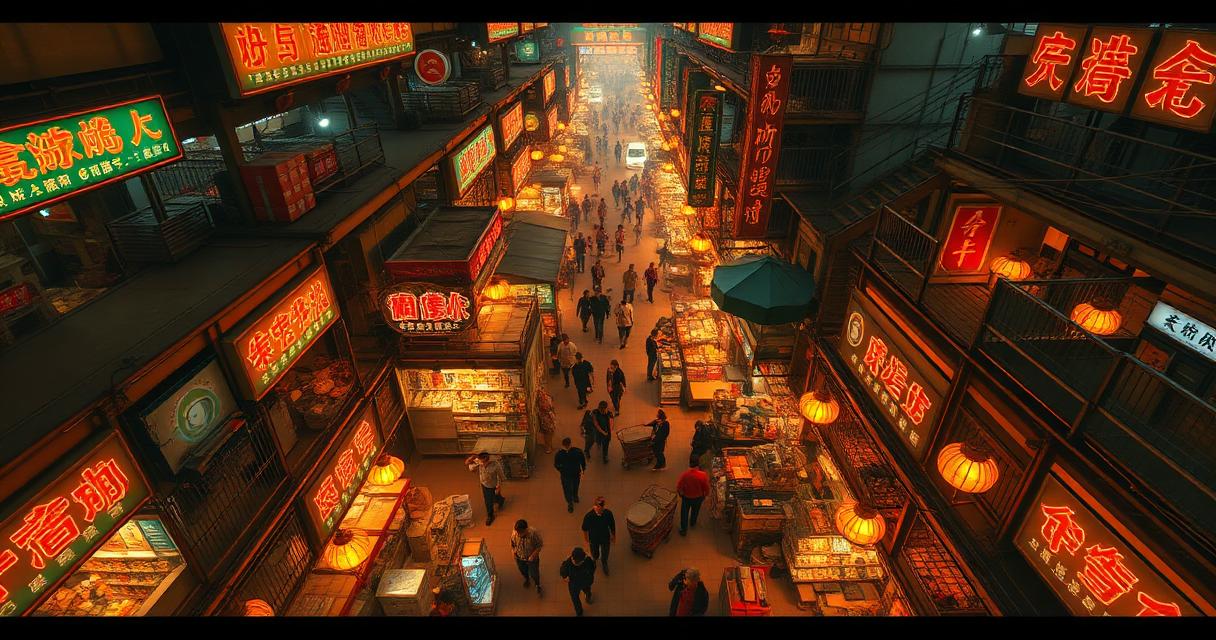
If you import small consumer goods — household items, hardware, toys, stationery, fashion accessories, gift items or seasonal products — there is one place in China that almost certainly stocks your category at the lowest landed cost on earth: the Yiwu Futian Market, also widely searched as Futian Yiwu. Spread across five connected districts in Yiwu city, Zhejiang province, the Yiwu International Trade City (官方名: Futian Market) houses more than 75,000 individual wholesale booths under one continuous roof. For B2B importers in Africa, the Middle East and Latin America, it is the single largest physical sourcing destination in the world for small commodities — and yet most foreign buyers either never visit, or visit once and leave overwhelmed. This guide explains how the market is structured, how to source from it efficiently, and how a Yiwu-based agent handles the consolidation, QC and DDP shipping that turn a chaotic two-day buying trip into a single container at your port.
1. What Is the Yiwu Futian Market (Futian Yiwu)?
The Yiwu Futian Market — also written Yiwu Futian, Futian Yiwu, or simply the Yiwu International Trade City — is the official wholesale hub for Yiwu, a city of roughly 1.9 million people two hours south of Shanghai by high-speed rail. Built and operated by the local government, the market is the export gateway for China's small-commodity industry: the World Trade Organization estimates that around 60-70% of the world's small commodities pass through Yiwu at some point. Unlike Alibaba or 1688.com, which are online catalogues, Futian is a physical marketplace with five connected buildings (Districts 1 to 5), each spanning multiple floors, each focused on different product categories.
2. The Five Districts of the Futian Yiwu Market
Knowing which district to walk into saves you days. District 1 is artificial flowers, toys, jewellery, hair accessories and ornaments. District 2 is hardware, kitchenware, electrical appliances, electronics accessories, clocks and audio equipment. District 3 covers stationery, sports equipment, cosmetics, eyewear, zippers, buttons, belts, ties and locks. District 4 is socks, gloves, underwear, daily necessities, scarves, hats, shoelaces, ribbons and textile fabrics. District 5 handles imported goods, bedding, curtains, knitting, automotive accessories and a section dedicated to African and Middle Eastern trade. A separate "Production Material Market" nearby sells raw materials and packaging in bulk.
3. Why Yiwu Futian Beats Alibaba for Small Commodities
For commodity categories — anything that comes in a carton, has low unit value and ships in volume — Yiwu prices are typically 20-40% lower than Alibaba quotes for the exact same product. The reason is structural: most Futian booth-holders are manufacturers or first-tier distributors with no Alibaba storefront overhead, no English-language sales staff and no international payment fees built into their prices. They sell in mixed-SKU container loads to wholesalers and retailers worldwide. You can also see, touch and price-compare physical samples in minutes — something no online marketplace can match.
4. MOQ Reality: Why Yiwu Suits Mixed-Container Buyers
The single biggest reason African, Middle Eastern and Latin American importers prefer Yiwu over factory-direct sourcing is the MOQ structure. Most Futian booths accept orders from one carton (often 50-200 units) instead of the 1,000-5,000 unit minimums typical of OEM factories on Alibaba. That means a single 20ft or 40ft container can be filled with 30-200 different SKUs from dozens of suppliers, all consolidated in one Yiwu warehouse. For retailers, supermarket chains, gift-shop buyers and bazaar importers, this mixed-container model is the entire reason Yiwu exists.
5. How to Verify a Yiwu Supplier
Booth-holders in Futian fall into three types: actual factory owners, factory-owned sales offices, and pure traders who sub-source from nearby manufacturers. None of these are bad in themselves — but the price you pay and the quality control you get vary a lot. Verification is straightforward if you know what to ask. Request the Chinese business licence (营业执照) and check the registered scope. Confirm whether the booth-holder is the factory or a trader, and if a trader, ask for the factory address. Inspect at least one sealed carton from current stock — not the polished showroom sample. For higher-risk orders, send an inspector to the factory itself (most are within 50km of Yiwu) before paying the balance.
6. Payment: Why You Need a Local Partner
Futian suppliers expect RMB payment via Alipay, WeChat Pay or domestic bank transfer — none of which are practical for foreign buyers without a Chinese bank account. Some larger booths accept USD telegraphic transfer (T/T) with 30% deposit and 70% against B/L, but rates are negotiated case-by-case and small booths often refuse it. A Yiwu-based sourcing agent solves this by paying each supplier in RMB from a local account, consolidating the goods at their warehouse, and invoicing you once in USD or EUR for the full container plus services. That single invoice also gives you the customs documentation your destination port requires.
7. Consolidation: Turning 40 Suppliers into One Container
A typical mixed-container Yiwu order involves 20-80 suppliers. Each delivers their cartons to a consolidation warehouse over a 1-3 week window. The warehouse counts every carton against the purchase order, performs a sampling AQL inspection on visually risky items, repacks weak cartons, applies destination labelling, builds the cargo manifest, and then loads everything into a single sealed container at the Ningbo or Shanghai port. Without a consolidation step, foreign buyers receive dozens of fragmented domestic deliveries that they cannot legally combine for export themselves.
8. DDP Shipping to Africa, the Middle East and Latin America
Yiwu cargo ships through Ningbo-Zhoushan and Shanghai — the two largest ports in the world by container throughput. Transit times from Ningbo are roughly 28-35 days to West Africa (Lagos, Tema, Dakar), 18-25 days to the Gulf (Jebel Ali, Dammam, Doha), 25-32 days to East Africa (Mombasa, Dar es Salaam), and 35-45 days to Latin American ports (Santos, Callao, Veracruz). For B2B buyers who want a fixed landed cost with no surprise port charges, a DDP (Delivered Duty Paid) quote bundles ocean freight, destination customs clearance, import duties and last-mile delivery into one number.
9. A Realistic First-Trip Workflow
If you are sourcing Yiwu for the first time and have a Yiwu-based agent on the ground, the workflow is now well-rehearsed. You send a product list with target prices and target volumes one week before arrival. The agent pre-shortlists booths by district so you walk the right floors only. Over two to three days on the market you confirm samples, negotiate prices in person, and the agent records every order in a unified PO list. Deposits are paid centrally. Goods flow into the consolidation warehouse over the next 2-4 weeks. QC, repacking and loading happen at the warehouse. You receive a single landed-cost invoice and a single container number with ETA. The first trip typically takes 3-5 days on the ground; subsequent re-orders can be placed entirely remotely.
10. When Yiwu Is the Wrong Choice
Yiwu is built for small commodities, not for large OEM projects. If you need branded packaging with proprietary design, custom tooling, CE/FCC/SASO/SONCAP certification or any regulated category (medical, children's, food contact, electrical mains), you are better served by a dedicated OEM factory sourced via a direct factory audit, not from a Futian booth. The same applies to high-value, low -volume goods where unit margins justify proper factory negotiation. For everything else — the mixed cartons, the seasonal gift stock, the supermarket general merchandise — Yiwu is the lowest-landed-cost option in the world.
11. Get a Yiwu Mixed-Container Quote
Send us your product list (categories, target unit prices, estimated quantities and destination port) and we will come back with a verified Yiwu sourcing plan: which districts to walk, which booths to approach, target FOB and DDP costs, a consolidation timeline and a QC plan. If you cannot travel to Yiwu yourself, we run the entire trip remotely on your behalf — including live video walk-throughs of the booths while you confirm what goes in the container.
Planning a Yiwu Futian sourcing trip?
Send us your product list and target destination. We will come back with a verified Yiwu sourcing plan — booths, FOB and DDP costs, consolidation timeline and QC plan — within 24-72 hours.
Get a Yiwu Sourcing QuoteFollow our Canton Fair coverage and sourcing updates on Instagram → @eliteglobaltrade.co