Latin America Trade
Latin America B2B Sourcing from China: Everything You Need to Know
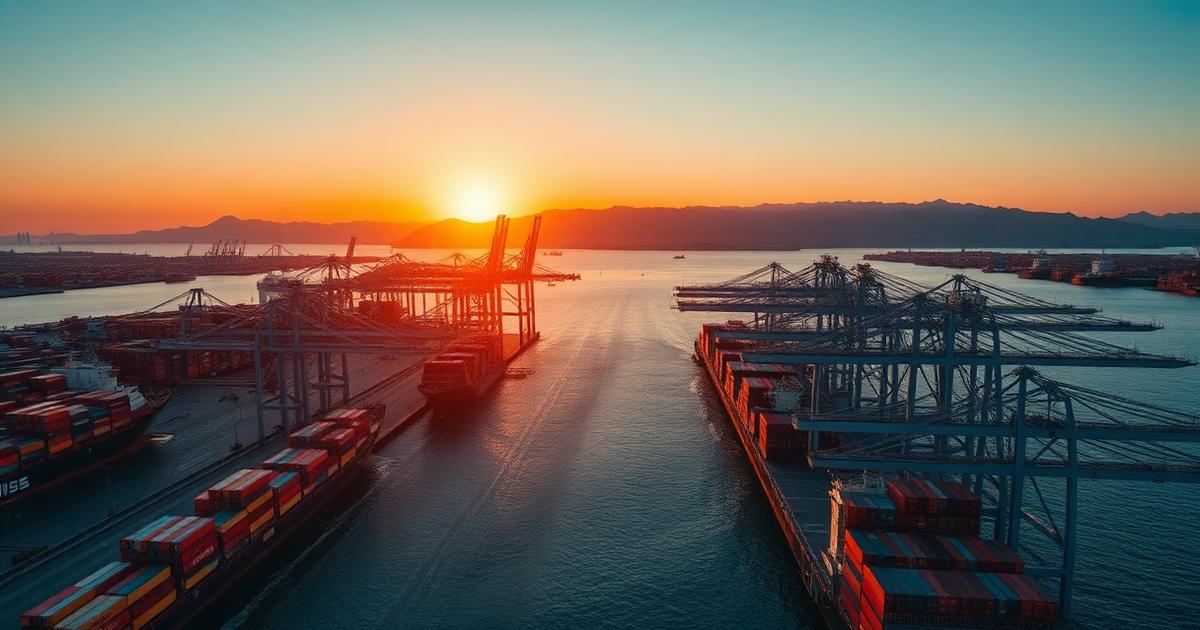
Latin America has become one of the fastest-growing markets for Chinese exports, with bilateral trade between China and the region surpassing $500 billion in recent years. From São Paulo to Mexico City, Bogotá to Santiago, businesses are tapping into China's vast manufacturing base to stay competitive. Whether you run a wholesale distribution company in Brazil, a retail chain in Colombia, or an ecommerce operation in Mexico, understanding how to source from China effectively can transform your margins, product range, and growth trajectory. This guide walks through everything Latin American importers need to know — from choosing the right product categories and finding verified suppliers to navigating customs, shipping routes and the choice between direct factory purchasing and using a professional sourcing agent.
1. Why Latin American Businesses Import from China
The commercial logic for Latin American companies sourcing from China is compelling and increasingly mainstream. China remains the world's factory, manufacturing everything from consumer electronics and textiles to heavy machinery and automotive parts at scales and price points that simply cannot be replicated elsewhere. For Latin American businesses, three drivers dominate the decision.
Cost competitiveness is the most obvious factor. Chinese factory pricing, even after ocean freight, insurance and import duties, typically undercuts equivalent local and regional manufacturing by 25 to 50 percent. In markets where consumers are price-sensitive and competition is fierce — especially Brazil, Mexico, Argentina and Chile — that margin advantage is decisive.
Product breadth is equally important. A single visit to the Canton Fair or a week in the Yiwu wholesale market exposes buyers to tens of thousands of product lines across virtually every category. For Latin American distributors and retailers looking to diversify their catalogue, this density of supply is impossible to match within the region.
Customisation capability rounds out the proposition. Chinese manufacturers are highly responsive to OEM, private-label and specification requests. For Latin American brands building local identity, the ability to adapt packaging, labelling, dimensions and finishes to local preferences — without committing to enormous volumes — is a strategic advantage that offsets some of the logistical complexity.
2. Top Product Categories for Latin American Importers
While virtually anything can be sourced from China, certain categories dominate the Latin American import landscape based on local demand patterns, margin structures and supply gaps. Here are the four strongest verticals.
Electronics & Consumer Tech
Smartphones, tablets, accessories, wearables, audio equipment, charging devices, home automation products and LED lighting. Shenzhen and Dongguan are the global centres for this category, with extremely competitive pricing and rapid product cycles.
Textiles, Apparel & Footwear
Ready-made garments, activewear, denim, uniforms, bags, shoes and textile raw materials. Guangdong and Zhejiang provinces offer enormous range, with factories experienced in exporting to standards required by Latin American retailers and department stores.
Machinery, Tools & Industrial Equipment
Construction machinery, agricultural equipment, power tools, packaging machines, CNC equipment and auto parts. These categories serve the infrastructure and industrial growth cycles underway across Brazil, Mexico, Colombia and Peru.
Consumer Goods, Home & Lifestyle
Kitchenware, home décor, furniture, toys, sporting goods, beauty accessories, pet products and seasonal items. Yiwu and surrounding areas specialise in high-volume, low-MOQ production of these fast-moving categories.
3. How to Find and Verify Chinese Suppliers
Finding a supplier is easy. Finding a reliable supplier is where most Latin American importers stumble. The verification process should be systematic and never skipped, regardless of how professional a supplier's Alibaba profile or website appears.
Business licence verification is the first checkpoint. Every legitimate factory in China holds a Unified Social Credit Code and a business licence issued by the local Administration for Market Regulation. Cross-checking this against official government databases confirms the entity exists, its registration capital, legal representative and scope of business.
Factory audit and on-site inspection provide the most valuable signal. A physical visit — or a professional third-party audit — reveals far more than any video call. Look at production lines, quality control stations, raw material storage, export packing areas and the general cleanliness and organisation of the facility. A factory that resists an audit is a factory to avoid.
Reference checks and trade history add another layer. Ask for export records to your region or similar markets. Verify those references independently. A factory with a track record shipping to Brazil or Mexico is more likely to understand the certification, voltage, labelling and packaging requirements your market demands.
Sample evaluation closes the loop. Before any production order, request pre-production samples and evaluate them against a written specification sheet. Do not proceed on the basis of catalogue photos alone. For more detail on this process, read our companion guide on working with a global China sourcing agent.
4. Understanding Import Duties and Customs for LATAM Countries
Every Latin American country operates its own customs regime, and while many participate in regional agreements, the specifics matter enormously for landed cost calculations.
Brazil maintains one of the most protective tariff structures. Import taxes (II), IPI, PIS/COFINS and ICMS can compound to raise the total duty burden significantly. Working with a customs broker experienced in the Siscomex system is essential. Certain product categories benefit from Mercosur agreements, but Chinese-origin goods generally face full applicable rates unless specific exemptions apply.
Mexico offers more favourable conditions under USMCA and various bilateral frameworks, though anti-dumping measures apply to select Chinese products including textiles and steel. Importation through Manzanillo, Lázaro Cárdenas or Veracruz requires careful classification under the TIGIE tariff schedule.
Colombia, Chile, Peru and the Andean economies operate under the CAN (Comunidad Andina) framework, with most Chinese imports subject to the Arancel Externo Común. Rates vary by product chapter but are generally lower than Brazil's. Chile, through its extensive network of free trade agreements, offers relatively streamlined import procedures at Valparaíso and San Antonio ports.
Across all markets, proper tariff classification, accurate commercial invoice values, and complete packing lists and bills of lading are non-negotiable. Errors or omissions trigger inspections, delays and penalty fees that erode margins quickly.
5. Shipping Routes and Costs: Sea Freight vs Air Freight
Geography shapes the logistics equation for Latin American importers. The Pacific and Atlantic coastlines each offer distinct routing options, and the choice between sea and air freight depends on product value, urgency and margin structure.
Sea freight (FCL and LCL) remains the dominant mode. Typical routes from Chinese ports — Shanghai, Ningbo, Shenzhen, Guangzhou — transit the Panama Canal for Pacific destinations (Manzanillo, Callao, Valparaíso, Guayaquil) or sail around the Cape for Atlantic ports (Santos, Buenos Aires, Cartagena). Transit times range from 28 to 45 days depending on routing, transshipment and port congestion.
Container rates fluctuate with global shipping market cycles. As of 2026, a 20-foot container from South China to Pacific Mexico or West Coast South America typically ranges from $1,800 to $3,200, while Atlantic Brazil routes run slightly higher. LCL is viable for smaller shipments but adds consolidation and deconsolidation costs at both ends.
Air freight suits high-value, time-sensitive or small-volume shipments — electronics samples, urgent replenishment, or seasonal goods with short windows. Rates from major Chinese airports (PVG, CAN) to Latin American hubs (GRU, MEX, BOG, SCL) typically run $4.50 to $8.50 per kilogram depending on volume, fuel surcharges and seasonal demand.
For many Latin American importers, the optimal approach is a hybrid: sea freight for baseline inventory and air freight for urgent or high-margin SKUs. DDP terms, where the supplier or agent handles freight, customs clearance and last-mile delivery to your warehouse, are increasingly popular as they transfer logistics complexity to the export side.
6. Using a Sourcing Agent vs Going Direct to Factories
This is one of the most consequential decisions a Latin American importer makes, and the right answer depends on your experience, volume, language capability and risk tolerance.
Direct factory purchasing works best for experienced importers with established supplier relationships, in-house Mandarin or bilingual staff, and the capacity to manage quality control, shipping documentation and customs clearance independently. The theoretical cost saving is real — no agent commission — but the hidden costs of miscommunication, specification drift, quality failures and shipping errors often erase that advantage.
A professional sourcing agent adds value across the entire import chain: supplier identification and audit, price negotiation, sample management, production monitoring, quality inspection, consolidation, export documentation and shipping coordination. For Latin American businesses without a permanent office in China, an agent is effectively your local team — except you pay only for the projects you run, not for a full-time overhead.
The decision typically comes down to order size and complexity. For single-product, high-volume, repeat orders with a trusted factory, direct purchasing can make sense. For multi-product projects, first-time sourcing, custom manufacturing, or any situation where quality and specification compliance are critical, an agent pays for itself many times over. If your project involves OEM or private label work, read our detailed guide to OEM manufacturing from China to understand how an agent protects your IP and manages the production lifecycle.
7. How Elite Global Trade Supports LATAM Importers
Elite Global Trade has supported buyers across Latin America for years, from industrial distributors in São Paulo to hotel developers in Mexico City and retail chains in Bogotá. Our service model is built around the specific needs of importers who need China expertise without the overhead of a local office.
Verified supplier networks: We maintain a pre-qualified database of factories across electronics, textiles, machinery, consumer goods, hotel supplies and industrial equipment — each audited for export capability, quality systems and compliance with Latin American standards.
End-to-end project management: From the first specification call to container delivery at your port, we manage every step: supplier shortlisting, sample approval, production monitoring, pre-shipment inspection, export documentation, freight booking and customs support.
Flexible shipping terms: We support FOB, CIF, DDP and EXW across all major Latin American ports, with established relationships at Pacific and Atlantic terminals. Whether you want to handle customs yourself or receive goods door-to-door, we structure the shipment to match your operational preference.
English, Spanish and Portuguese communication: Our team works directly with Latin American clients in their preferred language, eliminating the friction that slows many China-sourcing projects. Quotations, specification sheets, inspection reports and shipping documents are delivered professionally and on time.
8. Start Sourcing with Confidence
Sourcing from China into Latin America is not without complexity — tariffs, shipping distances, language barriers and quality risk are real. But with the right product category, verified suppliers, clear shipping terms and an experienced partner managing the China side, the rewards in margin, product differentiation and growth potential are substantial. The businesses that treat China sourcing as a strategic capability — not an occasional cost-saving tactic — are the ones capturing market share across the region.
If you are ready to source from China for your Latin American business, Elite Global Trade can help you move from idea to delivered container with professional support at every stage. Tell us what you need, and we will shortlist verified suppliers, negotiate pricing and manage quality — so you can focus on selling.
Follow our Canton Fair coverage and sourcing updates on Instagram → @eliteglobaltrade.co
Related articles: