Hospitality Sourcing
The Complete Guide to Sourcing Hotel Supplies from China
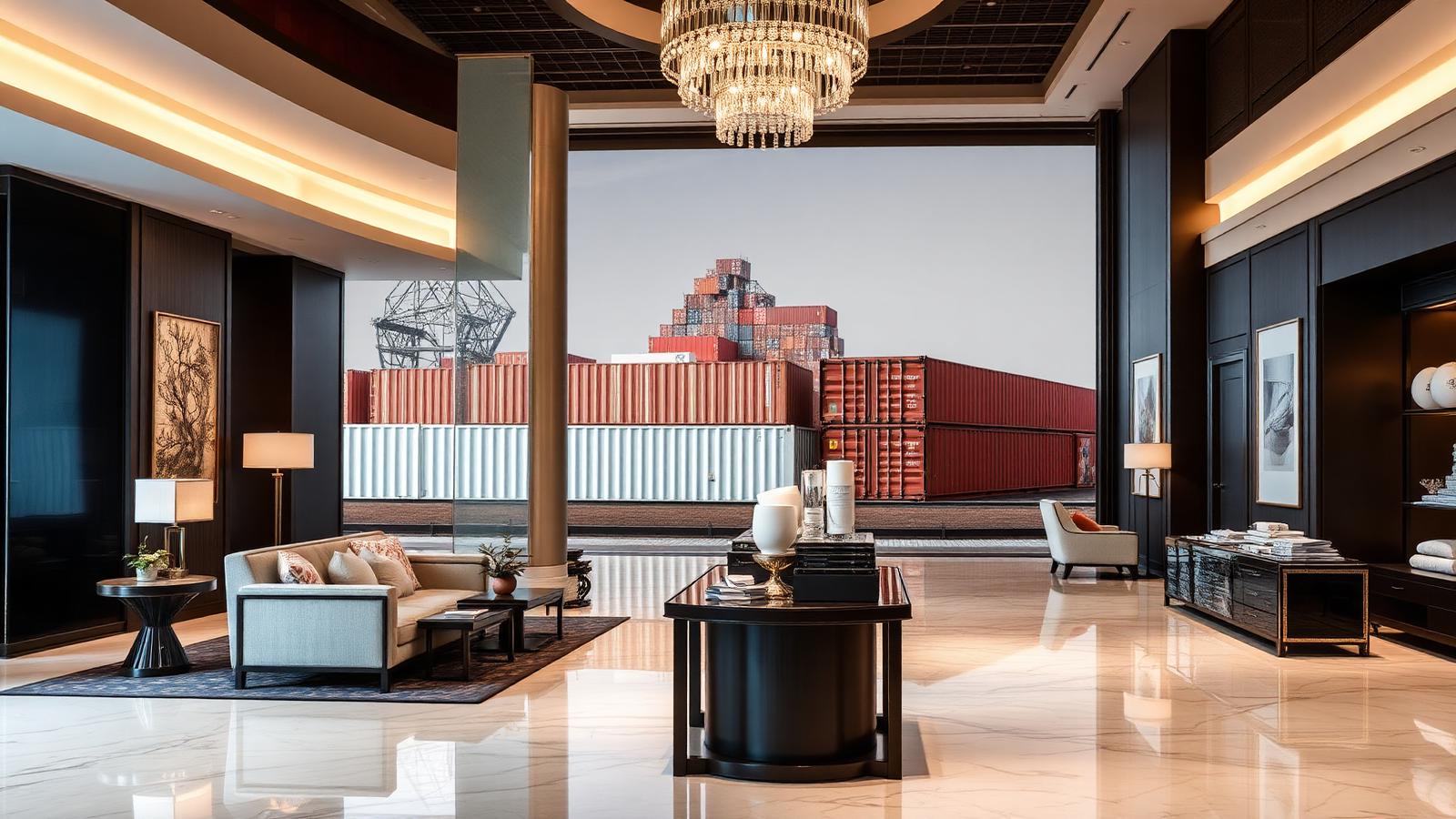
Opening a new hotel, refurbishing an existing property, or scaling a hospitality group across the Middle East or Africa puts procurement at the centre of the project. Furniture, fixtures and equipment (FF&E), linen, in-room amenities, kitchen equipment and staff uniforms together represent one of the largest capital and operating line items in any hotel budget. For owners and operators in Riyadh, Dubai, Doha, Lagos, Nairobi, Cairo or Casablanca, sourcing those categories directly from China is no longer a cost-saving experiment — it is the default playbook for serious hotel groups. This guide explains exactly how to do it properly, what to source, who to trust and how Elite Global Trade supports hospitality buyers from concept through container delivery.
1. Why Hotels in the Middle East and Africa Source from China
China is now the largest single producer of hospitality goods in the world. Guangdong, Zhejiang and Fujian provinces alone account for the majority of globally exported hotel furniture, linen, lighting, glassware, bathroom amenities and commercial kitchen equipment. For Middle East and African hotel owners, three structural advantages make Chinese sourcing compelling. First is unit economics: buying directly from factories typically delivers a 30 to 55 percent saving versus importing branded equivalents from Europe or Türkiye, even after sea freight and duties. Second is range: a single sourcing trip in Foshan or Guangzhou can cover headboards, case goods, carpets, lighting, mini-bars, safes, slippers and bathroom amenities — categories that would otherwise require dozens of separate suppliers across multiple continents. Third is customisation: Chinese factories are remarkably flexible on finishes, fabrics, branding, packaging and even structural design changes, which is critical for any project that has been designed by an interior architect and needs to be executed faithfully.
For the Middle East specifically, hotel groups serving the GCC's luxury and five-star segments lean on Chinese manufacturers for high-spec FF&E that meets hotel brand standards — Marriott, Hilton, Accor, IHG and regional flags such as Rotana, Jumeirah and Kempinski. African buyers, particularly across West and East Africa, source from China to outfit fast-growing mid-scale and upscale hotel pipelines, where margin pressure makes factory-direct sourcing essential. In both regions, the question is no longer whether to source from China — it is how to source safely, predictably and at the right specification.
2. What Hotel Supplies Can Be Sourced
Almost every physical item inside a hotel can be sourced from China. The practical scope for most hospitality projects splits into five main families:
FF&E — Furniture, Fixtures & Equipment
Guestroom case goods (wardrobes, desks, headboards, nightstands), upholstered seating, lobby and lounge furniture, banquet and ballroom chairs and tables, decorative lighting, mirrors, carpets and rugs, in-room safes, mini-bars, and outdoor furniture for pool and terrace areas.
Linen & Textiles
Bed linen (sheets, duvet covers, pillowcases), duvets and pillows, bath towels, hand towels and bathrobes, pool towels, table linen, blackout curtains and sheer drapery. Most projects standardise on 200–400 thread-count cotton sateen or percale with custom embroidery.
Bathroom Amenities & Toiletries
Branded shampoo, conditioner, shower gel and body lotion bottles, soap bars, shower caps, dental kits, shaving kits, slippers, vanity kits, laundry bags and amenity trays. Increasingly delivered in refillable dispensers for ESG compliance.
Kitchen & F&B Equipment
Commercial cooking ranges, combi ovens, refrigeration, dishwashing systems, stainless steel prep tables, banquet trolleys, chafing dishes, buffet equipment, glassware, chinaware, cutlery and bar tools.
Staff Uniforms & Operating Supplies
Front-office, housekeeping, F&B and engineering uniforms; housekeeping trolleys; cleaning chemicals and equipment; in-room collateral (compendiums, stationery, room signage); and branded packaging.
A typical 200-key upscale hotel will issue procurement packages across all five families. Sourcing through a single sourcing agent — Elite Global Trade's hotel supplies export service consolidates these into a managed programme rather than dozens of disconnected factory relationships.
3. How to Find Verified Chinese Suppliers
The single most expensive mistake hospitality buyers make is treating Alibaba listings or Canton Fair booths as proof that an exhibitor is a real manufacturer. A significant share of "factories" advertising hotel furniture are in fact trading companies — middlemen who add 10 to 25 percent to the factory gate price and have no real control over production timelines or quality. For a 300-room project that easily translates into hundreds of thousands of dollars of hidden cost.
Proper verification combines four layers. The first is documentary: business licence checks, scope of business verification, registered capital, shareholding, export licence and tax records. The second is reputational: cross-referencing customer lists, brand approvals (Marriott, Hilton, Accor and IHG all maintain approved-vendor programmes that can be verified), shipment records and online reviews. The third is technical: confirming production capacity, certifications (ISO 9001, BSCI, CE, FSC for timber, OEKO-TEX for textiles, NSF for kitchen equipment), and machinery capability against your actual scope. The fourth and most important is physical: an on-site factory audit by a sourcing agent who knows the category. Our China sourcing agent service bundles all four layers into a single deliverable so buyers see a verified shortlist, not a long list of unknowns.
4. Quality Control and Inspection Process
Hotel projects are unforgiving on quality. A delayed shipment of guestroom case goods can push a hotel opening by weeks and trigger penalty clauses with brand operators. A failed batch of linen — pilling, shrinkage, off-shade dye lots — can mean an entire floor of rooms going out of inventory. Elite Global Trade operates a four-stage QC protocol on every hospitality order.
Stage 1 — Factory audit: before any PO is issued, our inspectors visit the factory to verify production lines, raw material storage, finishing capability and quality management. For FF&E projects this includes timber moisture testing, lacquer and finishing inspection and upholstery workshop assessment.
Stage 2 — Golden sample approval: a pre-production sample is produced, inspected and signed off by both the buyer and EGT. The golden sample becomes the contractual reference for all subsequent production.
Stage 3 — During-production inspection (DUPRO): when 30–50 percent of the order is complete, we inspect to confirm consistency, catch deviation early and confirm the production schedule will hit the loading deadline.
Stage 4 — Pre-shipment inspection (PSI): before the goods leave the factory, an AQL-based inspection verifies quantity, workmanship, packing, labelling and loading. No container ships without a clean PSI report and the buyer's go-ahead.
5. Shipping Terms Explained — FOB, DDP, CIF
Most first-time hotel buyers underestimate how much shipping terms — the Incoterm — change the actual landed cost of an order. The three most relevant terms for hospitality projects are FOB, CIF and DDP.
FOB (Free On Board): the supplier delivers goods loaded onto the vessel at a named Chinese port (typically Shenzhen, Shanghai or Ningbo). The buyer takes responsibility for ocean freight, marine insurance, destination port handling, customs clearance, duties and inland transport. FOB gives the buyer maximum control over freight forwarders and is normally the cheapest headline price — but it requires real logistics capability on the buyer's side.
CIF (Cost, Insurance, Freight): the supplier covers ocean freight and marine insurance to the destination port. The buyer still handles destination port handling, customs clearance, duties and inland transport. CIF simplifies the China-side coordination but the buyer is still exposed to clearance complexity in the destination country.
DDP (Delivered Duty Paid): the supplier — or in practice, Elite Global Trade as the contracting sourcing agent — delivers goods to the hotel site, all costs included: ocean freight, insurance, destination handling, customs clearance, import duties, VAT and inland transport to the project address in Riyadh, Doha, Dubai, Lagos or Nairobi. DDP is by far the simplest model for hospitality buyers and the model we recommend for most projects, because it converts a complex international logistics chain into a single line item with predictable pricing.
6. Typical Lead Times and MOQs
Lead times vary significantly by category. As a planning rule, hospitality buyers should work to the following indicative timelines from PO to factory loading:
- Bed linen and towels: 30–45 days production. Typical MOQ of 500–1,000 pieces per SKU.
- Bathroom amenities: 25–40 days including bottle moulding and branded labelling. MOQ of 5,000–10,000 pieces per SKU.
- FF&E (case goods and seating): 60–90 days for a full guestroom package. Custom designs may require an additional 20–30 days for tooling and prototyping.
- Commercial kitchen equipment: 45–75 days depending on customisation. MOQ generally one unit but commercial pricing kicks in above 5–10 units.
- Uniforms: 35–50 days including embroidery and packaging. MOQ of 200–500 pieces per design.
On top of production, add 25–35 days of ocean transit to Jebel Ali, Jeddah, Dammam, Hamad Port, Lagos Apapa, Tema or Mombasa, plus 5–10 days for clearance and inland delivery. A realistic, end-to-end DDP project plan for a full hotel fit-out should assume 4–6 months from PO to site delivery — which is why early engagement with a sourcing agent is non-negotiable.
7. How Elite Global Trade Can Help
Elite Global Trade is a Hong Kong-headquartered sourcing agent specialised in end-to-end B2B procurement from China, with a dedicated hospitality desk serving hotel groups, project developers and owner-operators across the Middle East, Africa, Europe and the Americas. We act as a single accountable partner from brief to delivery: translating your interior designer's specification into factory-ready production drawings, building a vetted supplier shortlist, negotiating commercial terms in Mandarin, managing the four-stage QC programme described above, and consolidating multiple factories' output into bonded containers shipped DDP to your project site.
Our hospitality clients typically engage us at one of three points: at design development stage to value-engineer the FF&E budget, at procurement stage to source a finalised specification, or as a recovery partner when an existing supplier relationship has gone wrong. For new hotel openings, EGT also coordinates phased deliveries that match site readiness — back-of-house equipment first, then guestroom installation, then public areas and final OS&E — so the site is never overwhelmed with crates and the contractor's installation sequence is preserved.
For a deeper view of the full service, see our hotel supplies export page and our China sourcing agent service.
Planning a hotel project?
Tell us about your property, budget and timeline. We will come back with a sourcing plan, indicative DDP pricing and a verified factory shortlist.
Get a Free Sourcing QuoteFollow our Canton Fair coverage and sourcing updates on Instagram → @eliteglobaltrade.co