OEM Manufacturing
China OEM Manufacturing: How to Find the Right Factory for Your Brand
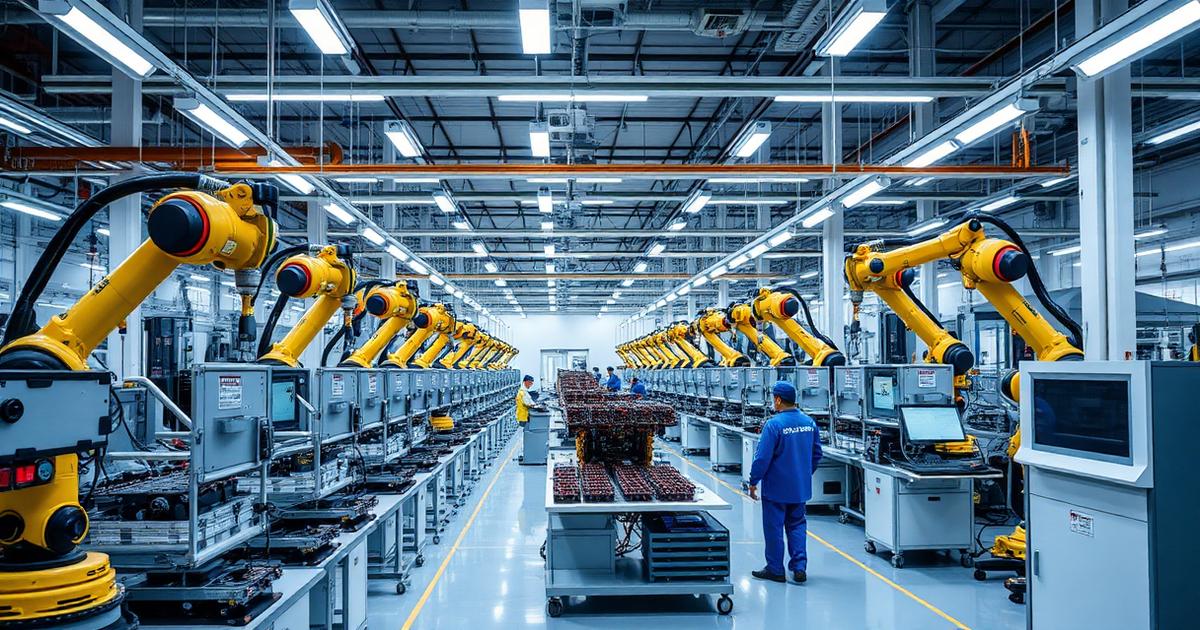
Building a brand today often means manufacturing products under your own label — cosmetics, apparel, electronics, packaging, industrial equipment or consumer goods. China remains the world's most capable and cost-effective OEM manufacturing destination, with factories that can produce everything from simple injection-moulded components to complex electronic assemblies at scales and price points unmatched elsewhere. But finding the right factory, protecting your design, and managing production quality are not trivial tasks. This guide explains how OEM manufacturing from China works, step by step, and how a professional sourcing agent turns what could be a risky gamble into a structured, repeatable process.
1. What Is OEM Manufacturing?
OEM stands for Original Equipment Manufacturer. In the context of China sourcing, it means a factory produces goods according to your design, specification and branding — not theirs. You own the product concept, the packaging design and the brand. The factory provides the production capability, labour, machinery and raw material procurement. The finished goods carry your logo, your artwork and your product codes.
OEM manufacturing is distinct from buying off-the-shelf products. It involves customisation: adapting dimensions, selecting materials, specifying colours, designing packaging and sometimes developing entirely new product forms. The process requires clear technical communication, prototype validation, tooling investment (in some cases) and rigorous quality control at every stage.
2. OEM vs ODM — What Is the Difference?
Many first-time buyers confuse OEM with ODM, and the distinction matters significantly for your intellectual property and commercial flexibility.
OEM (Original Equipment Manufacturer): You provide the design, specifications and branding. The factory manufactures to your brief. You own the IP. The factory cannot sell your design to other customers. This is the right model when you have a unique product concept and want full control over the outcome.
ODM (Original Design Manufacturer): The factory designs and manufactures the product. You select from their catalogue, apply your branding, and sell under your label. The factory owns the design. This model is faster and cheaper to launch but gives you no exclusivity — the same product can appear under dozens of other brands in the same market.
For serious brand builders, OEM is the only sustainable path. ODM works for testing markets or for commodity categories where differentiation is not the priority.
3. How to Find OEM Factories in China
Finding a factory is easy. Finding the right factory requires a systematic approach that goes well beyond Alibaba search results.
Industry clustering: China's manufacturing is geographically clustered. Electronics and hardware concentrate in Shenzhen, Dongguan and the Pearl River Delta. Textiles, apparel and footwear dominate Guangzhou, Foshan and Zhejiang. Beauty and cosmetics manufacturing clusters in Guangzhou and surrounding areas. Industrial machinery and automotive parts are strong in Jiangsu, Zhejiang and Shandong. Knowing where to look is the first filter.
Trade shows and factory visits: Canton Fair (Guangzhou), the Hong Kong Electronics Fair and industry-specific exhibitions in Shanghai and Shenzhen are invaluable for meeting factory managers face to face. Nothing replaces walking a production floor to understand a factory's real capability.
Sourcing agent networks: Professional sourcing agents maintain pre-qualified factory databases across multiple provinces. A good agent has already done the initial filtering — auditing licences, visiting facilities and evaluating export capability — so you start with a shortlist of viable partners rather than an ocean of unknowns.
4. How to Audit and Verify a Factory Before Ordering
Factory audit is the single most important step in OEM sourcing. A factory that looks good online may be undersized, financially unstable or incapable of meeting your quality standards. A comprehensive audit covers:
Business legitimacy: Unified Social Credit Code verification, business licence scope, registered capital, export licence and tax compliance status.
Production capability: Number of production lines, machinery age and maintenance, capacity utilisation, shift patterns and peak-season flexibility.
Quality management: ISO 9001 or equivalent certification, incoming material inspection records, in-process QC stations, final inspection protocols and testing equipment.
Social and environmental compliance: BSCI, Sedex or SA8000 audits where relevant, environmental permits and waste management practices.
Financial stability: Credit reports, historical payment behaviour and references from other international clients.
Never place an OEM order without at least a documentary audit and preferably an on-site inspection. The cost of a factory audit is negligible compared to the cost of a failed production run.
5. Minimum Order Quantities and Typical Pricing
MOQs vary enormously by product category and factory size. As a general guide:
Consumer electronics and accessories: 500–2,000 units per SKU for established factories. Start-ups or smaller workshops may accept 100–300 units at higher per-unit pricing.
Apparel and textiles: 200–500 pieces per design, with lower minimums for basic cut-and-sew items and higher minimums for complex garments with embroidery, printing or specialised finishing.
Cosmetics and personal care: 1,000–5,000 units depending on formulation complexity and packaging customisation. Bottle moulding and custom packaging often drive the MOQ more than the product itself.
Industrial equipment and machinery: Often one unit for large equipment, though commercial pricing typically improves at 5–10 units.
Pricing is always a function of volume, material specification, finish quality and packaging complexity. A professional sourcing agent benchmarks your quotation against comparable orders to ensure you are paying market rates, not tourist rates.
6. Quality Control During Production
OEM manufacturing without quality control is speculation. A rigorous QC protocol includes four stages:
Pre-production sample approval: A golden sample is produced, inspected and signed off by both parties before mass production begins. This sample becomes the contractual reference.
First-article inspection: When the first production units come off the line, they are checked against the golden sample and specification sheet. Any deviation is corrected before the full run proceeds.
During-production inspection (DUPRO): At roughly 30–50% completion, inspectors verify that production is consistent, catch early deviations and confirm the factory is on schedule.
Pre-shipment inspection (PSI): Before any goods leave the factory, an AQL-based random sample inspection checks quantity, workmanship, functionality, packaging and labelling. No shipment proceeds without a clean report.
7. Protecting Your Brand — NDA Agreements and IP Protection
Intellectual property protection is the most common concern for first-time OEM buyers. The reality is that Chinese contract law supports IP protection when the right agreements are in place and the right procedures are followed.
Non-Disclosure Agreements (NDAs): A properly drafted NDA in both English and Chinese, enforceable under Chinese law, should be signed before any design files, specifications or moulds are shared. The NDA should cover product design, packaging artwork, formulations and any proprietary processes.
Mould and tooling ownership: If you pay for moulds, dies or tooling, the contract must explicitly state that you own them. The factory should not use your tooling for other customers without written permission.
Trademark registration: Register your trademark in China before disclosing branding to factories. China operates a first-to-file system, and unscrupulous actors have been known to register foreign brands locally to extract payment.
Factory selection: The best IP protection is choosing the right factory. Established exporters with international brand relationships have more to lose from IP violations than they have to gain. A thorough audit and reference check is your strongest defence.
8. How Elite Global Trade Manages the Entire OEM Process
Elite Global Trade has managed OEM manufacturing projects across electronics, apparel, cosmetics, food and beverage packaging, industrial components and hospitality products. Our process is designed to protect your IP, control quality and deliver on time:
Design translation: We convert your concept or reference sample into factory-ready technical drawings, BOMs and specification sheets in Chinese.
Supplier shortlisting and audit: We present 2–4 audited factories matched to your product, volume and quality requirements, with full transparency on their capabilities and limitations.
Negotiation and contract: We negotiate pricing, payment terms, lead times, quality standards and IP protection clauses. Every agreement is documented and signed before production begins.
Prototype to production: We manage sample cycles, golden sample approval, tooling development and pilot runs, with full reporting at each stage.
Quality assurance: Our inspectors run DUPRO and PSI at the factory, with photographic evidence and detailed reports delivered to you within 24 hours of inspection.
Shipping and delivery: We consolidate production from multiple factories if needed, book freight, prepare documentation and deliver under FOB, CIF or DDP terms to your destination.
For a detailed overview of our OEM capabilities, see our OEM manufacturing from China service page. If you are comparing sourcing agents or evaluating how to structure your first OEM project, our China sourcing agent service covers the full lifecycle from concept to delivery.
9. Start Building Your Brand with Confidence
OEM manufacturing from China is not a shortcut — it is a professional discipline that rewards preparation, verification and quality control. The businesses that succeed are those that treat factory selection as seriously as product design, that protect their IP before sharing it, and that never skip inspection before shipment. With the right partner managing the China side, OEM manufacturing becomes a scalable, repeatable engine for brand growth.
If you have a product concept and want to turn it into a manufactured reality, Elite Global Trade can guide you through every step — from finding the right factory to delivering the finished goods to your door.
Ready to manufacture your own brand?
Tell us about your product idea and we will come back with a factory shortlist, prototype plan and clear pricing.
Start Your OEM Project TodayFollow our Canton Fair coverage and sourcing updates on Instagram → @eliteglobaltrade.co
Related articles: