Africa Trade
Africa-China Trade: How to Use a Sourcing Agent to Import Smarter
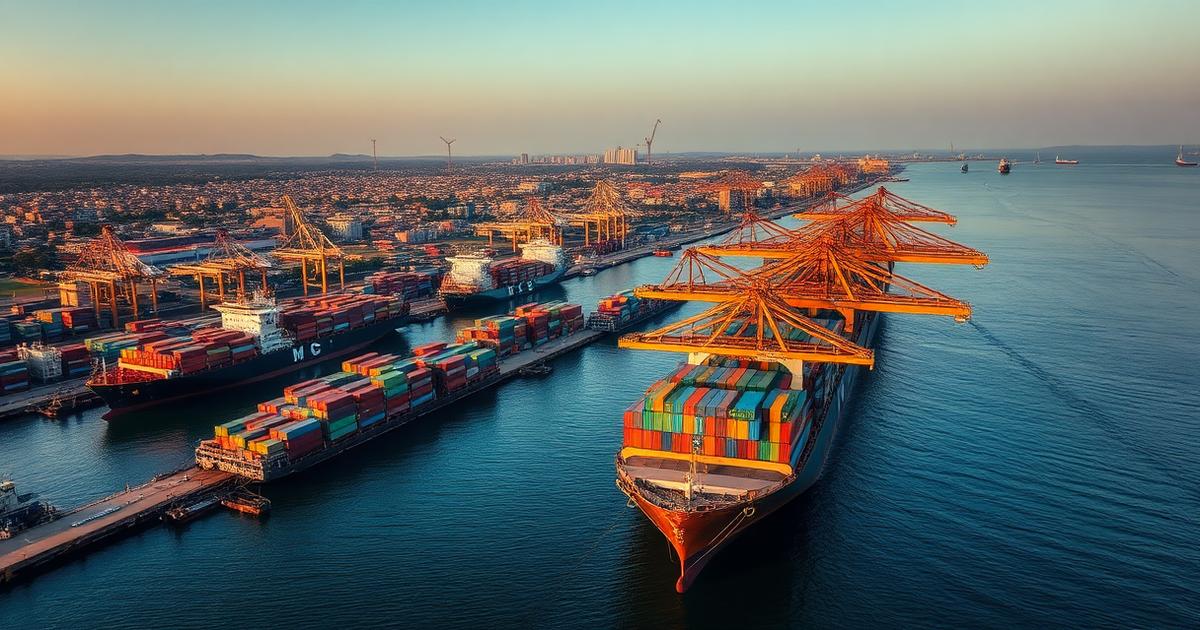
China is now Africa's largest trading partner, with bilateral trade exceeding $280 billion annually and continuing to grow. From Lagos to Nairobi, Accra to Addis Ababa, African entrepreneurs, wholesalers and industrial buyers are increasingly turning to Chinese manufacturers to source products that meet local demand at prices that preserve margin. Yet the path from identifying a product online to receiving a container at your warehouse is fraught with complexity — supplier verification, quality control, payment security, shipping logistics and customs clearance. This guide explains why a sourcing agent is not a luxury but a necessity for serious African importers, and how to work with one to reduce cost, risk and delay.
1. The Growth of Africa-China Trade
The Africa-China trade relationship has transformed over the past two decades. What began as a resource-for-infrastructure exchange has evolved into a broad-based commercial flow encompassing consumer goods, industrial equipment, building materials, electronics, textiles, automotive parts and agricultural machinery. Chinese manufacturers now view Africa not merely as a commodity destination but as a fast-growing consumer market with over 1.4 billion people and a rapidly expanding middle class.
For African businesses, this shift creates genuine opportunity. A distributor in Nigeria sourcing building materials, a retailer in Kenya importing electronics, or a hotel developer in Ghana procuring FF&E can all access Chinese factory pricing that undercuts European and local alternatives by significant margins. The challenge is not whether the products exist or whether the pricing is attractive — it is whether you can source reliably, predictably and at the quality your market expects.
2. Common Challenges African Importers Face When Buying Direct
Many first-time African importers attempt to buy directly from Chinese factories through platforms like Alibaba or through contacts made at trade fairs. While this approach occasionally works, the failure rate is high enough that it has earned a reputation across African business communities. The most common pitfalls include:
Supplier misrepresentation: Trading companies posing as manufacturers, factories overstating their capacity, and businesses with no export licence presenting themselves as established exporters. Without on-ground verification, these risks are invisible until money has changed hands.
Quality drift and specification gaps: What arrives in the container often differs from what was ordered — wrong materials, incorrect dimensions, inferior finishes, missing components. Without a pre-shipment inspection, the first time you see the product is when it clears your local port.
Payment fraud and escrow failures: Advance payment scams, middlemen who disappear after receiving deposits, and disputes over refund terms when orders go wrong. The recovery process across international jurisdictions is slow and expensive.
Shipping and customs complexity: Incorrect documentation, misunderstood Incoterms, demurrage charges at congested ports, and unexpected duties or inspection holds. Lagos Apapa, Tema, Mombasa and Djibouti all have unique clearance procedures that inexperienced shippers routinely mishandle.
3. What a Sourcing Agent Actually Does
A professional sourcing agent is your operational partner on the China side of the transaction. The role is far broader than simply introducing you to a factory. At Elite Global Trade, our agent service covers the full import lifecycle:
Supplier identification and audit: We build a shortlist of 2–4 verified factories matched to your product, volume and quality requirements. Every factory is audited for business licence validity, export qualification, production capacity and quality management systems before they are presented to you.
Price negotiation and terms: We negotiate factory gate pricing, payment terms, lead times and shipping arrangements in Mandarin, with full knowledge of market rates. Our consolidated order volume typically unlocks pricing that individual buyers cannot achieve independently.
Sample management: We coordinate sample production, track delivery, document deviations and manage revision cycles until the sample matches your signed specification.
Quality control: Our inspectors conduct during-production and pre-shipment inspections at the factory, using AQL-based sampling protocols. No container ships without a clean inspection report.
Logistics and documentation: We book freight, prepare commercial invoices, packing lists, bills of lading, certificates of origin and any required compliance documentation. For DDP shipments, we also manage destination customs clearance and inland delivery.
4. How Agents Save You Money Compared to Going Direct
The common objection to using a sourcing agent is cost — why pay a commission when you can go straight to the factory? The answer is that direct purchasing is rarely cheaper in practice, and the hidden costs of getting it wrong are substantial.
First, factory pricing through an agent is often lower than direct pricing. Agents bring repeat order volume, faster payment cycles and lower supplier acquisition costs. Factories prefer reliable agent relationships over one-off foreign buyers who may never return. The pricing gap typically absorbs a significant share of the agent's fee.
Second, agents prevent costly mistakes. A single failed order — wrong specifications, poor quality, or a supplier who disappears — can cost tens of thousands of dollars in lost deposits, replacement orders, missed sales windows and damaged customer relationships. Professional QC and supplier verification pays for itself many times over.
Third, agents optimise shipping and consolidation. Rather than shipping a half-empty container from one factory, we consolidate multiple product lines into full containers, reducing per-unit freight costs and simplifying customs clearance with unified documentation.
5. OEM and Private Label Opportunities for African Brands
Beyond simply reselling Chinese-made products, a growing number of African entrepreneurs are using Chinese manufacturing to build their own brands. The OEM and private label model — where a Chinese factory produces goods to your design, under your brand, with your packaging — is now accessible to small and medium businesses, not just multinational corporations.
We work with African clients to develop custom products across cosmetics, apparel, electronics accessories, home goods, food and beverage packaging, and industrial equipment. The process typically involves concept development, prototype production, mould or tooling investment (where applicable), packaging design and production ramp-up. Our role is to protect your design IP, manage the factory relationship and ensure the finished product matches your brand standards.
For African markets where brand differentiation is increasingly important, OEM sourcing from China offers a pathway to margin improvement and customer loyalty that pure trading cannot match. Read our detailed guide to OEM manufacturing from China to understand the full process.
6. Shipping and Logistics to African Ports
Shipping from China to Africa has improved significantly over the past decade, with more direct routes, better port infrastructure and a competitive freight forwarding market. The most common shipping routes serve:
West Africa: Lagos (Apapa/Tin Can), Tema (Ghana), Lomé (Togo), Cotonou (Benin), Abidjan (Côte d'Ivoire) and Dakar (Senegal). Transit time from South China is typically 28–35 days.
East Africa: Mombasa (Kenya), Dar es Salaam (Tanzania) and Djibouti (for Ethiopia and landlocked East African states). Transit time is 20–30 days, with Djibouti serving as the primary gateway for Ethiopian imports.
Southern Africa: Durban and Cape Town (South Africa), Maputo (Mozambique) and Walvis Bay (Namibia). Transit times run 18–28 days depending on routing.
We recommend DDP shipping for most African clients, particularly those new to importing. Under DDP terms, Elite Global Trade handles ocean freight, insurance, destination port handling, customs clearance, duties and inland delivery to your warehouse. This converts a complex multi-party logistics chain into a single contracted outcome with predictable pricing.
7. How Elite Global Trade Works with African Clients
Elite Global Trade has supported African importers since our founding, and the region remains a core focus of our business. We have active projects and logistics partnerships serving Nigeria, Ghana, Senegal, Kenya, Ethiopia, South Africa and across the continent. Our approach for African clients is structured around three principles:
Accessibility: We communicate in English, French and Portuguese, respond to enquiries within 24 hours, and provide clear, documented quotations with no hidden fees. Our goal is to make the sourcing process as transparent as dealing with a local supplier.
Risk reduction: Every factory in our network has been personally audited. Every order runs through our four-stage QC protocol. Every shipment is insured and tracked. We treat your capital with the same care we would our own.
Local market knowledge: We understand the certification, voltage, labelling and packaging requirements of African markets. We know which products face import restrictions, which require SONCAP or other conformity certificates, and how to structure documentation for smooth customs clearance at your destination port.
For a broader view of how we support trade between Africa and China, visit our Africa-China trade page.
8. Start Importing from China with Confidence
Sourcing from China to Africa is not a gamble — it is a professional discipline. The businesses that succeed are those that treat supplier verification, quality control and logistics management as seriously as they treat sales and marketing. A professional sourcing agent is the bridge between your local market knowledge and China's manufacturing capability.
If you are an African importer looking to source from China — whether your first order or your fiftieth — Elite Global Trade can help you do it more reliably, more cost-effectively and with less risk. The first step is a conversation about what you need, where you operate and what success looks like for your business.
Ready to import from China?
Tell us about your product, volume and destination. We will respond with a verified supplier shortlist, indicative pricing and a clear sourcing plan.
Request a Free Sourcing ConsultationFollow our Canton Fair coverage and sourcing updates on Instagram → @eliteglobaltrade.co